Rajasthan stands as one of India’s pioneering states in the digitization of public land records through its dedicated portal, Apna Khata. Also frequently referred to as the e-Dharti portal, this platform serves as the central repository for the state’s Record of Rights (RoR). By providing instant access to computerized data, the portal aims to eliminate the need for physical visits to revenue offices while reducing transparency-related fraud.
What is Apna Khata (e-Dharti)?
The Apna Khata portal is the primary digital interface for the Department of Revenue in Rajasthan. It was developed under the Digital India Land Records Modernization Programme (DILRMP), a national initiative to computerize land records and modernize management systems.
Digital India Land Records Modernization Programme (DILRMP)
The DILRMP has set ambitious targets for Rajasthan, aiming for 100% computerization of all Tehsils and the complete digitization of cadastral maps. Currently, over 98% of land records across 421 Tehsils are already available online. This digital shift allows for real-time updates to the Record of Rights, which historically were only updated every five years during formal settlement cycles.
Key Benefits of Using the Portal
The transition from manual paper registers maintained by local officials to a digital portal offers significant advantages for landowners and buyers. Users can verify property titles instantly, which is a critical step in conducting due diligence before a purchase. Furthermore, the system provides a transparent “mutation” (name transfer) history, making it harder for fraudulent actors to manipulate ownership data.
How to Check Rajasthan Jamabandi Nakal Online
The most sought-after document on the portal is the Jamabandi Nakal, which serves as an official extract of the land record.
Step-by-Step Guide to Access Land Records
Accessing your records involves a standardized workflow designed for ease of use:
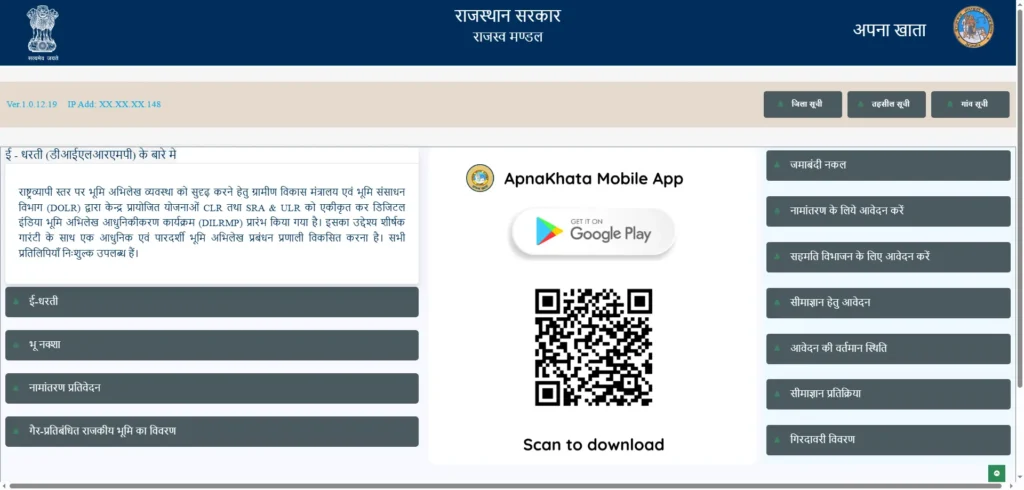
- Visit the Official Site: Navigate to
apnakhata.rajasthan.gov.in. - Select Location: Choose your District from the interactive map or dropdown menu, followed by the Tehsil and the specific Revenue Village.
- Enter Applicant Details: Provide the applicant’s name, address, and city for the request record.
- Select Search Method: You can search for land by Khata number, Khasra number, Name, USN, or GRN.
- View Record: Click on “Nakal Dekhe” to display the record on your screen.
Difference Between E-Signed vs. Informational Copies
The portal provides two distinct types of Nakal documents based on the user’s requirements.
Legally Valid E-Signed Nakal
For official use in courts or banks, users should obtain an E-Signed Nakal. These copies carry legal validity because they are digitally signed by revenue authorities. Obtaining this version requires a nominal fee, typically ranging from ₹10 to ₹20, which can be paid through integrated gateways like e-Mitra.
Free Informational Copy for Reference
If a user only needs to verify details for personal reference or preliminary due diligence, they can download a non-certified “View Copy”. These are available free of charge but are clearly marked as not for legal purposes.
Understanding Rajasthan Land Record Terminology
Navigating the revenue system requires familiarity with a specific operational taxonomy used in administrative workflows.
What is a Khasra Number?
The Khasra number is a unique geographic survey index assigned to an individual land parcel. According to the Rajasthan Land Revenue Rules of 1957, this number identifies plot boundaries, soil classification, and the total area of the parcel.
What is a Khata Number?
A Khata number acts as a family account ledger. It links multiple plots or Khasras to a single individual or a joint family, allowing the revenue department to track consolidated holdings within a village.
What is a Khatauni Number?
The Khatauni is essentially a cultivation register. It tracks who is currently occupying and farming the land, including details on occupancy rights and rental indices.
What is Girdawari?
Girdawari refers to the seasonal harvest inspection report. Local officials, known as Patwaris, conduct these inspections twice a year (Kharif/Sayalu and Rabi/Unhalu) to record crop cultivation patterns and irrigation sources.
Land Mutation (Naamantaran) Process
Mutation is the process of updating the revenue records to reflect a change in ownership.
How to Apply for Name Transfer Online
When agricultural land is transferred through a sale deed, gift deed, or inheritance, a mutation application must be filed. Rule 169-I mandates that once a deed is registered at the Sub-Registrar’s office, an automatic notice is often generated on the system to alert the Patwari to update the online Jamabandi. Users can also apply manually through the “Apply for Mutation” link on the Apna Khata homepage.
Tracking Mutation Status
The transparency of the digital system allows users to track their application status in real-time. By selecting the “Mutation Status” tab on the portal, users can see if their application is under process, sanctioned, or rejected by the Competent Authority. If a mutation is rejected, a specific note regarding the refusal is recorded in the system.
Role of Apna Khata in Home Loans and Property Verification
Financial institutions rely heavily on digitized records to verify collateral before approving credit.
Why Banks Require Jamabandi Nakal
For a bank, a Jamabandi Nakal provides definitive proof of ownership and identifies any existing encumbrances or mortgages on the property. This allows lenders to ensure that the land being pledged as security for a loan is free from legal disputes and has a clear title chain.
Avoiding Real Estate Fraud in Rajasthan
Prospective buyers are encouraged to use the portal to verify that the seller’s name matches the official revenue records. Legal experts recommend checking at least a 30-year ownership chain and cross-referencing Khasra maps to ensure there are no unauthorized occupants or encroachments on the site.
Apna Khata Mobile App & Technical Support
To increase accessibility, various mobile applications and automated support tools have been introduced.
Features of the Apna Khata Mobile App
While the official web portal remains the primary source, several Android apps allow users to view Jamabandi and Bhulekh details on their smartphones. These apps typically provide basic information through a “pocket office” interface, though users often report that these third-party tools can be ad-heavy.
Automated Assistance via NICCI Chatbot
The National Informatics Centre (NIC) Rajasthan has developed “NICCI,” a smart chatbot that can be plugged into state portals. This voice-enabled assistant uses proximity and language rules to provide automated replies to user queries in both English and Hindi, helping citizens navigate the complexities of land records.
Integrated Financial Management
For transactional services like paying for certified copies, Apna Khata is integrated with the state’s Integrated Financial Management System (IFMS). This integration ensures that payments are encrypted and securely processed, generating a Government Reference Number (GRN) for every transaction.